


Everyday routine
Healthy Lifestyle Products for Everyday Men
Daily vitamins, greens blends and omega-3 products all want the same slot in your morning. This page sorts out what each one actually covers, how it fits an ordinary week in Surabaya, and where the category quietly oversells itself.
The wider category
Healthy lifestyle products are a shopping list, not a single purchase
Daily vitamins get most of the attention, but they're one item in a broader group. Greens blends, omega-3 products and general daily-nutrition powders compete for the same slot in your routine, and they compete for different reasons.
This page looks at how these products fit into an ordinary week, what each one is actually good at, and where the category gets oversold. Nothing here is a substitute for eating vegetables, sleeping well and moving your body — a men's vitamin supplement closes small gaps, and that's the honest scope of it.
The daily vitamins baseline
A standard men's multivitamin is still the simplest way to cover common nutrient gaps. Nordic Naturals Men's Multivitamin and Ritual Essential for Men 18+ appear regularly in 2026 coverage, both described by their makers as third-party tested, and both built around one clear daily serving. Nature Made Multi for Him and Nutricost Multivitamin sit at the value end with basic coverage at low cost.
The core proposition hasn't changed in years: one product, one serving, a broad panel of vitamins and minerals for men. Everything else on this page is either an alternative to that baseline or an addition on top of it. If you already take a multivitamin and it suits your week, you are not missing a step — you are holding the reference point the other formats get measured against.
- Nordic Naturals Men's Multivitamin third-party tested
- Ritual Essential for Men 18+ daily serving
- Nature Made Multi for Him value end
- Nutricost Multivitamin basic coverage

The baseline format has barely moved: a bottle, a defined serving, a broad nutrient panel. When you compare anything else on this page, that's the reference it gets measured against.
Greens blends and what they replace
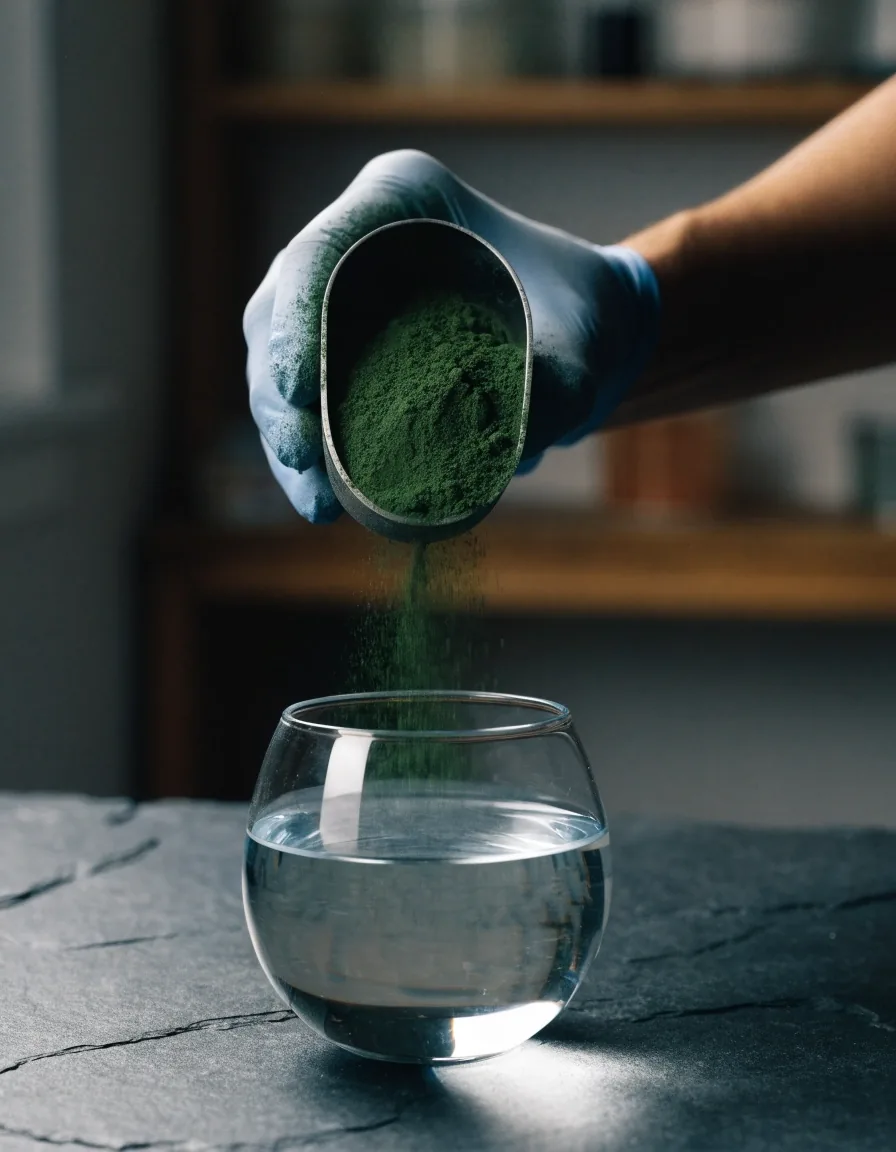
AG1 Next Gen combines vitamins, minerals, plant extracts, enzymes, prebiotics and probiotics in its published description, and it's marketed as a broad daily nutrition blend rather than a narrow vitamin. Most men who use a greens blend use it instead of a multivitamin, not alongside one, because taking both is redundant and expensive.
The trade-off is precision. A greens blend gives you a wide mix of ingredients at modest amounts; a multivitamin gives you defined amounts of specific nutrients you can read off the label. If you're choosing between them, the honest question is whether you care more about breadth or about knowing the exact numbers behind what you swallow.
Choose a greens blend when
You already make a morning drink, you want one scoop to cover a wide spread of ingredients, and you're not going to examine every amount on the panel.
Stay with a multivitamin when
You want to know the milligram amount of each nutrient, you dislike mixing powder, or you'd rather spend the difference on actual vegetables.
What to check
Reading a label before you trust it
Four things decide whether a men's vitamin supplement is worth the shelf space in your cupboard. None of them require a laboratory — they require reading the panel and being honest about your week.
Omega-3 products
Omega-3s appear in all-in-one packs like 1st Phorm Micro Factor, which includes fatty acids as part of its multi-part structure, and they're also sold as standalone fish oil capsules. Standalone products make more sense if you want a defined dose and don't need the rest of a daily pack.
This is one of the categories where quality varies the most, and where third-party testing earns its keep, because oxidation in fish oil is a real and common problem rather than a theoretical one. Storage matters too, especially in a hot climate — a bottle that lives in a car is a bottle you are wasting money on.
Read how we assess ingredients Read how we assess ingredients
Dose on the label
Standalone bottles tell you how much you get per capsule. A pack spreads the same fatty acids across several components.
Freshness signals
Oil that smells sharp when you open the bottle has turned. That's information, not something to push through.
Surabaya storage
Heat and humidity shorten the useful life of oils. A closed cupboard beats a car glovebox every time.

All-in-one packs as a lifestyle choice
1st Phorm Micro Factor is sold as a multi-part daily pack rather than a single bottle, combining vitamins, antioxidants, fatty acids and other add-ons. It's positioned as a broad lifestyle product, and it behaves like one: several components, several decisions removed.
The men who like this format tend to want one decision and no ingredient-level thinking. The men who don't tend to want to know exactly what each component does. Both are reasonable positions and neither is a mistake. It's worth being honest about which one describes you before buying a system you'll have to keep restocking every month.
If your pantry already holds three half-used bottles, the problem was never which product you picked. It was how many decisions you asked yourself to make every morning.
Powders, capsules and routine fit
Powders need water, a shaker and a moment that isn't your commute. Capsules need water and five seconds. Tablets are similar to capsules but often larger. For most men the format that survives is the one with the fewest steps — which usually means natural capsules for strength and vitality at home rather than a powder you have to mix before you've had coffee.
That isn't an argument against blends, which carry real convenience advantages when you're already making a morning drink. It's an argument for matching the product to where you'll actually be standing when you take it.
Powder
Best when it's already a habit
Water, a shaker and a cup you already use in the morning. Works if the drink exists in your day already; fails if you have to invent the moment.
Capsule
Best when the day is unpredictable
Water, five seconds, done. Survives travel, early starts and mornings where you're already running late — which is most mornings.
Tablet
Best when you dislike swallowing
Similar routine to capsules, but often larger and sometimes breakable. Easy to take, easy to forget if the bottle is out of sight.
Storage and shelf life in a hot climate
Heat and humidity matter more than most product pages admit, and Surabaya supplies plenty of both. Check the label for storage instructions and follow them.
If a product smells off when you open it, that's information — don't finish a bottle that's clearly turned, especially with oils. A cupboard shelf beats a car glovebox, and an airtight container beats a bathroom shelf where steam reaches it twice a day.
Building a simple routine
A routine that works tends to be small. One daily vitamin, one fish oil capsule, water, and a set time each morning.
Adding a powder on top of that is fine if you enjoy it. Adding three more products usually means dropping all of them within a month. Pick the smallest set of items that covers what you actually care about, put them somewhere visible, and treat the routine as fixed for at least a quarter.
-
Step one
Pick the smallest set
One daily vitamin and one omega-3 is a complete starting point. Everything else has to earn its place against those two.
-
Step two
Fix the time and place
Next to the kettle, beside your keys, on the desk you sit at first. If the bottle is in a drawer, the routine doesn't exist.
-
Step three
Rebuy before it runs out
Gaps are where routines die. One spare bottle in the cupboard keeps the habit moving through a busy week.
-
Step four
Hold it for a quarter
Three months of consistency tells you more than two weeks of enthusiasm. Judge the routine, not the first bottle.
What healthy lifestyle products don't do

They don't replace vegetables. They don't fix a bad sleep schedule. They don't offset regular heavy drinking, and they don't substitute for moving your body.
This is the part of the category that gets quietly buried under marketing, and it's worth stating directly. A daily vitamin closes gaps. It doesn't rewrite the rest of your week. If you're buying a supplement instead of fixing something more fundamental, no product on this page changes that, and the money would be better spent elsewhere.
Used well, these are ordinary items in an ordinary day — a capsule beside the kettle, a bottle kept out of the heat, a routine you don't think about. That's the whole ambition. If a product needs a story to justify itself, that story is usually doing more work than the ingredient panel.
Common questions
Short answers to the questions that come up most when men start building a routine around healthy lifestyle products.
Should I take a greens blend and a multivitamin together? +−
Usually not. Both cover overlapping nutrients, and stacking them mostly means paying twice for the same ground. Pick the one that matches how you actually like taking things — a scoop in a morning drink, or a capsule with water.
How many days should I give a routine before judging it? +−
Judging consistency takes a quarter, not a fortnight. What you can assess much sooner is whether the format fits your morning at all — that's the part worth changing quickly.
Where should I keep supplements in a humid climate? +−
A closed kitchen cupboard, away from the stove, the sink and direct sun. Bathroom shelves take on steam twice a day, and a car is the worst option in Surabaya by a wide margin.
Do I need a different product for training days? +−
Not automatically. A daily baseline covers most weeks without changes. If you want energy and endurance supplements around training, treat them as an addition you're choosing on purpose, not a default you add to everything.
Where does age fit into this? +−
Some products are labelled for men 18+ and others are built around older age groups. Age is a reasonable starting filter, but the routine that fits your actual week matters more than the bracket on the bottle.
Start with one product and one morning
Compare the daily formulas people actually keep taking, look at what each one includes, and choose the smallest routine you can hold for a full quarter.
Where to continue
Keep reading, or come and ask
If you want to see what different daily formulas actually contain side by side, the comparison page lays them out row by row. If your question is about your own week rather than a product, write to us — an editor reads every message during working hours.
- Choosing a Daily Formula how to pick one
- Ingredients and Daily Nutrition what's inside
- About Our Editorial Approach how we write
- [email protected]
- Phone
- +62 31 5314 0131
- Working hours
- Monday–Friday, 09:00–18:00
- Address
- Jl. Basuki Rahmat No. 129, Embong Kaliasin, Genteng, Surabaya 60271
- Site
- suplemenpria.net
Everything on this page is general product information about dietary supplements, written for adults building an everyday routine. It isn't personal advice, and if you take other products or have a condition you're managing, a qualified professional is the right person to ask.